
In the field.
Six deployments, five industries. Same capability each time: see the situation, decide what it means, tell someone what to do about it — in the moment it still matters.
A first-week hire ran a senior procedure on day one.
Commissioning teams were bottlenecked on three senior engineers. Everyone else waited, or guessed, or flew someone in. Procedures lived in a 400-page PDF nobody opened on the floor.
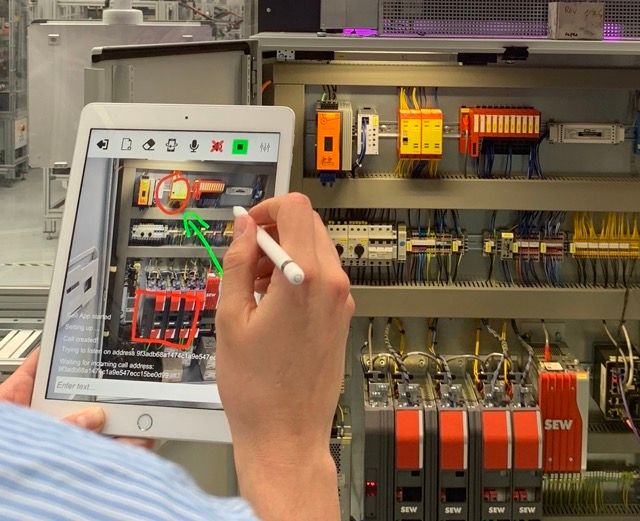
Ermes on a tablet at the cabinet. The step you need appears anchored to the terminal you're looking at — no search, no scrolling. When something is off-script, one tap opens a call where the remote expert draws directly on the live view while the operator keeps both hands on the work.
New technicians complete procedures previously reserved for senior staff. Travel for routine interventions effectively stopped.
- time to first correct action
- −72%time to first correct action
- onboarding to first solo procedure
- 1 dayonboarding to first solo procedure
- expert site trips per quarter
- −9expert site trips per quarter
“The knowledge stopped living in three people's heads. That was the whole point.”
From 4% sampling to 100% inspection, with no added headcount.
Quality relied on statistical sampling. Porosity defects reached the customer between samples, and every escape triggered a containment exercise that cost more than the parts.
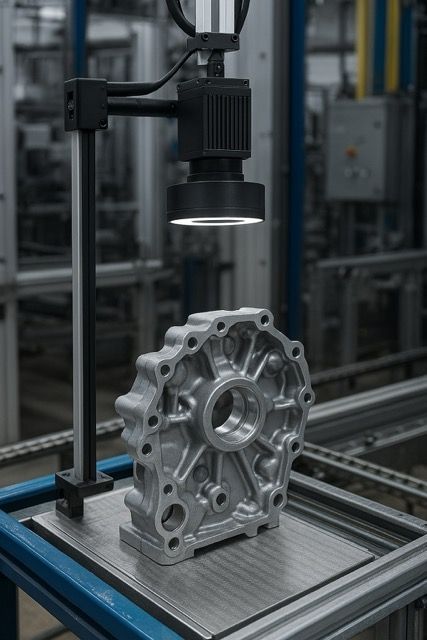
A fixed imaging station on the existing line fixture, grading every unit at takt with edge inference under 200 ms. Rejects route to rework automatically; borderline parts are queued for a human with the image and the reason attached.
Every part inspected. Defect escapes fell by more than half in the first quarter, and drift in the casting process became visible days before it produced scrap.
- units inspected
- 100%units inspected
- defect escape rate
- −63%defect escape rate
- verdict latency at the line
- <200msverdict latency at the line
Senior inspectors covering three continents without boarding a plane.
Certified inspectors were the scarce resource. Assets in remote sites waited weeks for a qualified pair of eyes, and inspection evidence arrived as photos in an email with no reliable link to the asset.
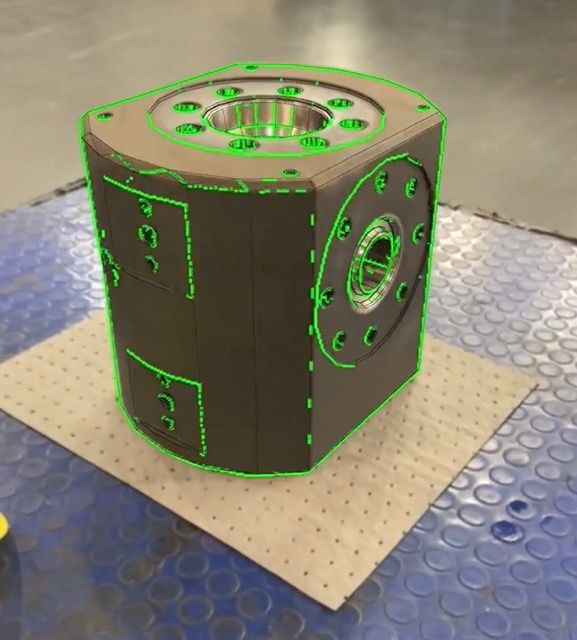
Iris guides the on-site technician through the protocol, checkpoint by checkpoint, anchored to the real geometry. Every capture is tied to the asset, timestamped and assembled into a report before the technician leaves the site.
Inspection lead time collapsed, and reports became defensible: each finding carries the image, the position and the protocol step that produced it.
- continents covered by one expert pool
- 3continents covered by one expert pool
- inspection lead time
- −80%inspection lead time
- reports written after the fact
- 0reports written after the fact
“We stopped arguing about what the photo showed. The evidence carries its own context now.”
Handover snags found while the crew was still on site.
Snagging happened at the end, by walkthrough, on clipboards. Half the defects were discovered after the subcontractor had demobilised — the most expensive moment possible to find them.
A walk-and-capture protocol on a handheld. Checkpoints stay pinned to the structure, so the same position is inspected the same way on every pass, by whoever is on site that week.
Defects surface during the works, not after. Rework negotiated with the crew that caused it, while they are still on the job.
- defects caught before demobilisation
- 4×defects caught before demobilisation
- handover rework cost
- −35%handover rework cost
The car the buyer imagined, standing in front of them.
Showrooms can hold three cars. Buyers choose from a catalogue of thousands of combinations and then wait weeks to discover whether they like it.
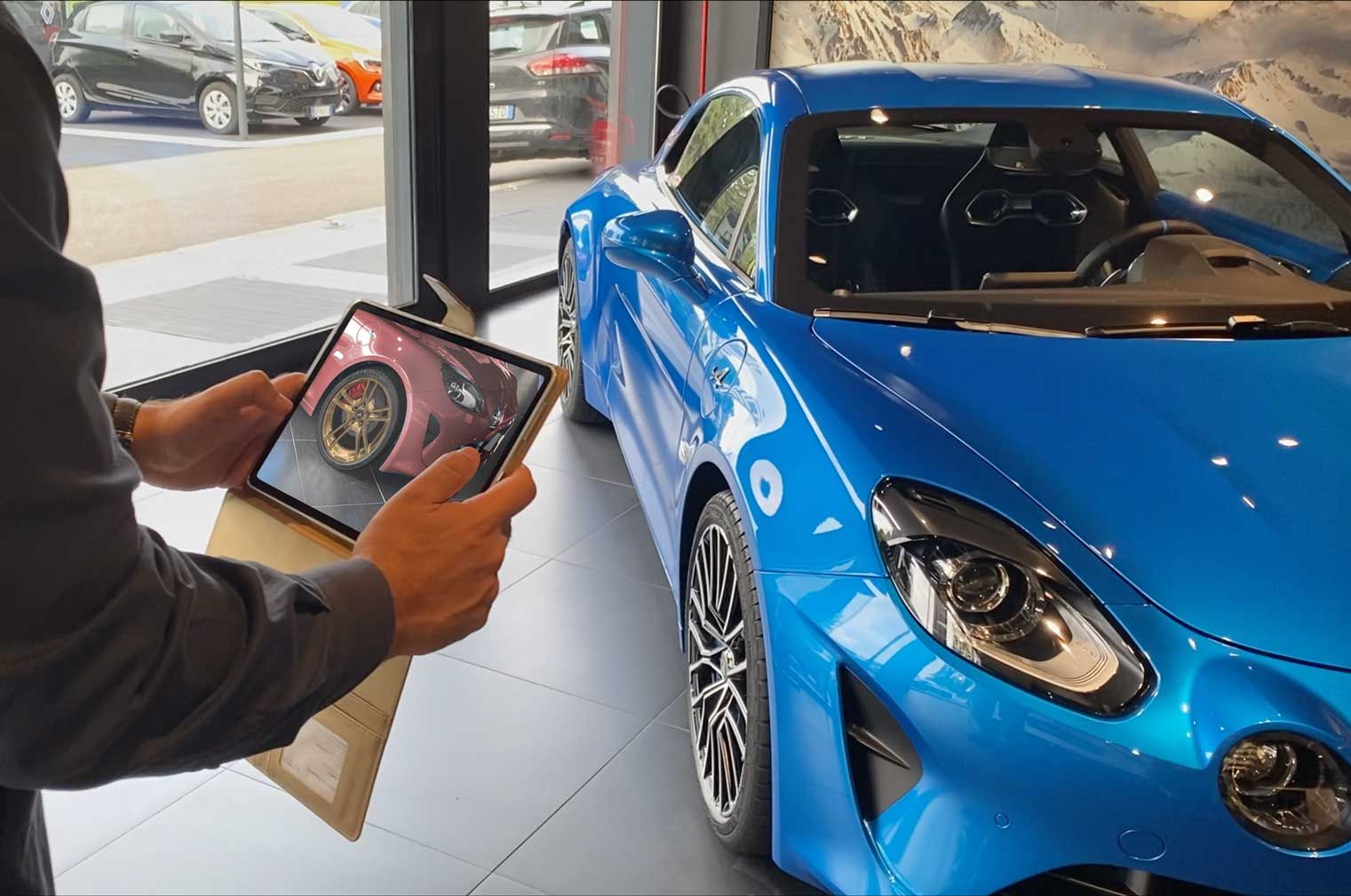
Anima reads the vehicle in the room and re-skins it live — paint, trim, wheels, packs — at full scale, on a tablet the salesperson holds beside the real car. Configuration and conversation stay in the same moment.
Configuration sessions got longer and closed harder. Buyers commit to higher trims because they have seen them, not read them.
- options attach rate
- +31%options attach rate
- time spent configuring
- +2.4×time spent configuring
- average decision cycle
- −1 weekaverage decision cycle
Blocking a show in the empty venue, weeks before load-in.
Set, lighting and camera positions were argued over in drawings and rebuilt on site, burning the most expensive hours in the schedule — the ones with the whole crew standing in the room.
Full-scale AR staging in the real venue: the set placed where it will stand, sightlines and camera positions checked from actual seats, changes made by walking rather than redrawing.
Decisions that used to happen during load-in now happen in a site visit. Fewer surprises on the day, less overtime.
- on-site build time
- −2 dayson-site build time
- to lock the staging
- 1 visitto lock the staging
Your situation is probably in here somewhere.
Most deployments start with one site visit and a problem nobody has managed to automate yet. Tell us yours.
Discuss your use case →